A classroom upgrade can lose usable teaching space if the furniture plan counts seats before it checks circulation, sightlines, pupil fit and maintenance access. By the end, you will have a way to size each room, compare bench formats, write a procurement specification and test deliveries for Delhi’s dust, monsoon moisture and heavy daily use.
Key takeaways
- Protect aisles, door clearance and sightlines before setting the seat count.
- Choose bench formats that let you reconfigure rows without moving fixed furniture.
- Specify desk heights by pupil group, not by a single classroom average.
- Require identical dimensions, materials, warranty terms and delivery checks in every bid.
Plan the classroom before you count the seats
A classroom’s seat count is the number left after protecting movement and sightlines, not the number that fits on a floor plan. Measure the clear internal length and width, excluding cupboards, columns, doors and the teacher’s platform.
1. Mark a 1,200 mm teaching zone in front of the blackboard. Keep the board, board controls and teacher’s route visible from every seat; do not place a tall rear bench or storage unit in that sightline.
2. Reserve at least a 600 mm side or central aisle, plus a clear route from the door to the teacher’s position. Allow about 900 mm between bench rows where pupils and teachers must pass regularly; reduce neither aisle after measuring bags, wall projections and open doors.
3. Draw the actual bench footprint, including legs and any connector. Count complete rows across the usable width, then complete positions along the usable depth.
A two-seater 1,200 mm wide by 450–600 mm deep in a 7,500 mm by 6,000 mm room might produce three benches across and four rows deep: 24 seats, before door and circulation checks.
4. Place paper seat markers and sit in the front, middle and rear positions. If a pupil must lean sideways to see the blackboard, remove or reposition that bench.
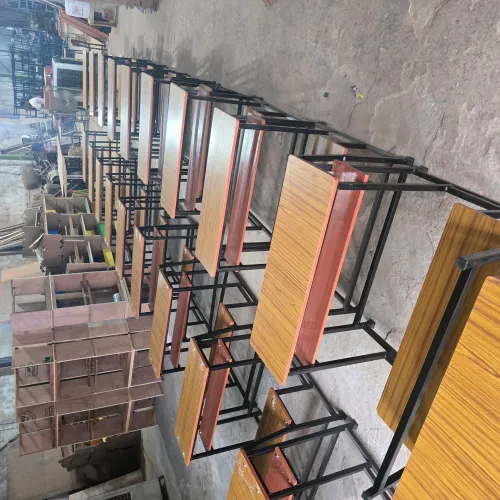
For modular desk benches for government schools in Delhi, request a scaled layout and a marked walking route before ordering. Treat 24 as an illustration, not a standard capacity; the room’s doors, columns, class size and teaching method decide the safe total.
Compare bench formats by the layout you need to change
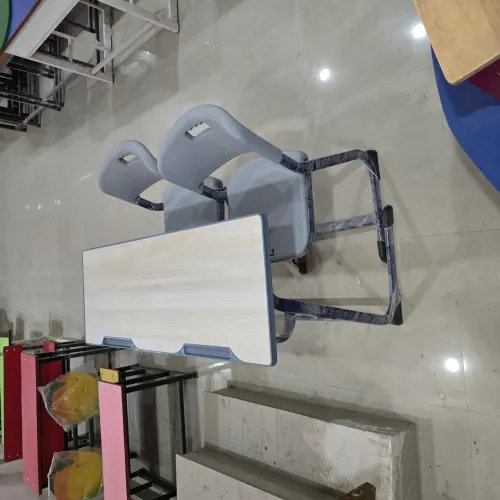
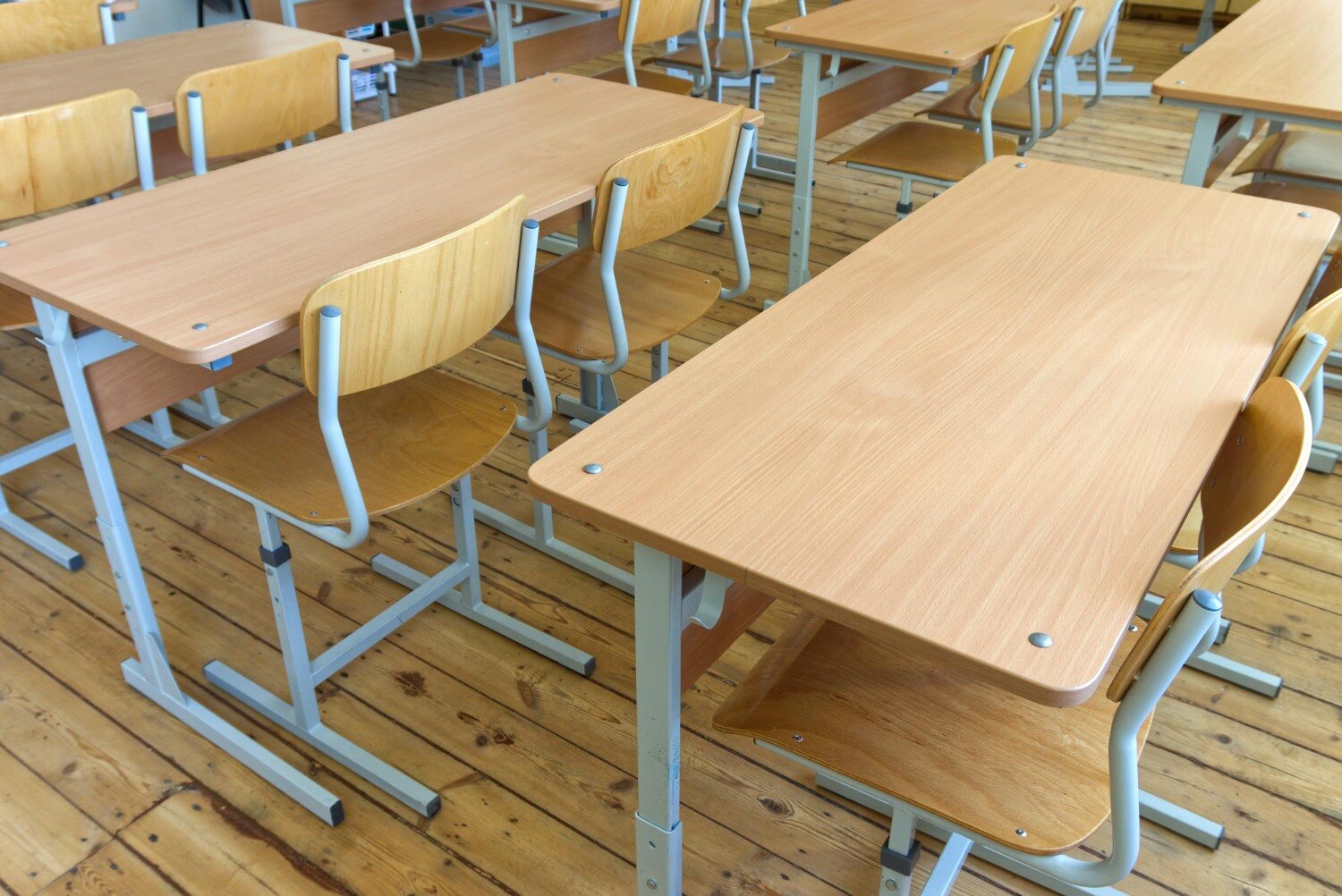
Choose two-seater benches for dense, orderly rows; choose separate desks and chairs when pupil fit or frequent rearrangement matters. The right format depends on whether you are changing aisles, teaching groups, or only replacing worn units.
| Format | Capacity and stability | Flexibility | Maintenance fit |
|---|---|---|---|
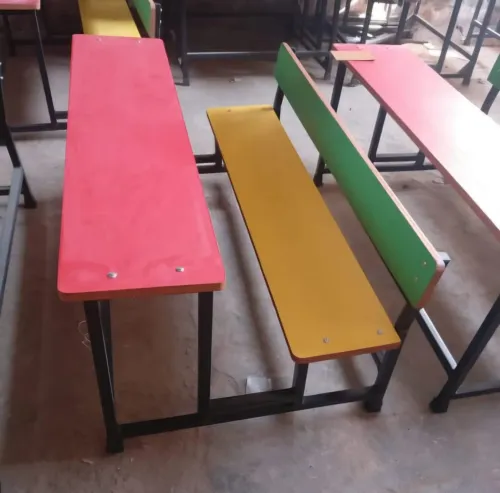
| Two-seater dual bench | Highest capacity; stable in straight rows | Limited once positioned | Few parts and fast cleaning, but one damaged top affects two pupils |
| Linked desk-bench unit | Good capacity; resists sideways movement | Reconfigure by bay, not by individual seat | Efficient, provided connectors and screw points are replaceable |
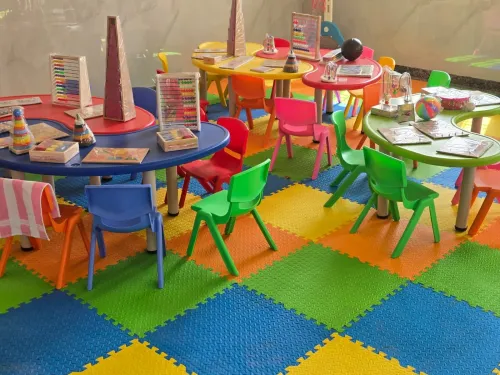
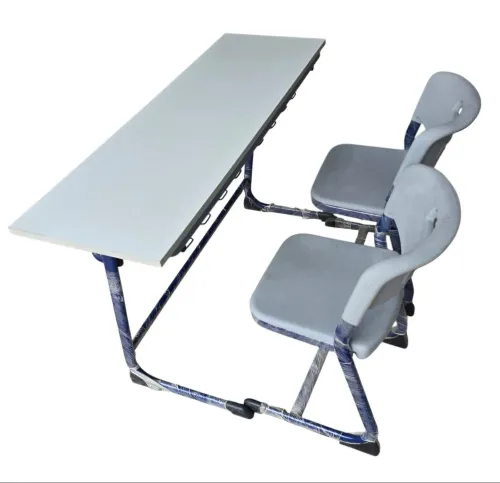
| Separate desks and chairs | Lower density; strongest individual fit | Best for mixed-height pupils and changing layouts | More pieces to clean and move; replaceable feet are essential |
| Reconfigurable group table | Lowest row capacity; stable when properly linked | Best for collaborative clusters and rapid layout changes | More edges and connectors require inspection and cleaning |
For modular classroom benches in Delhi, call a unit modular only if staff can change its orientation or bay arrangement without drilling or welding. Ask for repeatable widths, captive fasteners, detachable writing tops, replaceable leg assemblies and components sized for classroom doors and stairways. A knock-down desk that becomes fixed after installation is not modular.
Inspect the underside, not only the laminate. Sealed board edges, closed tube ends, smooth surfaces and accessible joints reduce dust and cleaning-water retention; replaceable polymer or rubber feet prevent dragging noise and floor damage. Continuous benches save space, but separate foot support and writing room still matter for every pupil, especially in mixed-height classes.
Match each desk height to the pupils who use it
Do not specify one bench size for Classes 1–12. Measure pupils’ popliteal height, from the floor to the knee crease, and seated elbow height, then select at least two size bands for each school rather than assigning furniture by age or class alone.
EN 1729 reference bands provide a useful starting point:
| EN 1729 reference | Finished seat height | Writing-top height |
|---|---|---|
| Size band A | Approximately 350 mm | Approximately 590 mm |
| Size band B | Approximately 380 mm | Approximately 640 mm |
| Size band C | Approximately 430 mm | Approximately 710 mm |
| Size band D | Approximately 460 mm | Approximately 760 mm |
| Size band E | Approximately 510 mm | Approximately 820 mm |
For mixed-height classrooms, order a calculated mix of adjacent bands and place pupils by measured fit. A child’s feet should rest on the floor, knees should clear the underside, and elbows should reach the writing surface without raised shoulders.
Government school furniture in Delhi needs this measurement-based approach because one nominal height creates poor posture for the smallest or tallest pupils.
Put these finished dimensions in the tender, not just a product name:
- Seat depth and width
- Desk depth and usable top area
- Clear knee and foot space
- Bay width and overall footprint
- Material thickness and dimensional tolerance
Reserve at least some workstations with unobstructed knee clearance and keep their frames outside the accessible route. Check this after installation; a catalogue drawing cannot prove that the final bench arrangement works.
Write a specification that survives Delhi’s daily conditions
Define performance requirements in the bid; “ergonomic”, “modular” and “heavy duty” prove nothing by themselves. State finished seat and writing-top heights, usable top depth, bay width, clear knee and foot space, overall footprint, material thickness, edge treatment and dimensional tolerances.
Ask school desk bench suppliers in Delhi for an approved sample and dimensioned drawing before comparing prices.
| Material | Failure to guard against | Required construction detail |
|---|---|---|
| Powder-coated steel | Corrosion at scratched joints and tube ends | Closed tube ends, continuous welds where specified, rust-resistant coating and no sharp weld spatter |
| Plywood or solid timber | Swelling, splitting or delamination | Sealed cut edges, rounded corners and screw embedment that does not break through the face |
| Pre-laminated particleboard | Water ingress at cut-outs and screw locations | Edge banding or sealed edges, protected underside and no exposed unsealed holes |
Treat the writing top-to-underframe joint as a load-bearing connection, not a cosmetic fitting. Require captive or replaceable hardware, adequate screw embedment, an underside inspection and replaceable polymer or rubber feet; castors introduce unwanted movement unless locking hardware and a defined need are specified.
- Material declarations, drawings, tolerances, warranty and spare-part list.
- Inspection of welds, tube ends, edges, fasteners, underside and foot contact.
- Load, stability, repeated-use and cleaning-resistance tests with the method and pass criteria written into the bid.
- A sample installation checked for rocking, sharp edges, loose joints, water retention and dimensional compliance.
That is the baseline for institutional furniture in Delhi, where dragging, dust and wet cleaning expose weak details quickly.
Make supplier bids and delivered furniture comparable
Require school desk bench suppliers in Delhi to price one identical schedule, not a catalogue description. Record finished seat and writing-top heights, clear knee and foot space, usable top depth, bay width, overall footprint, material thickness, edge treatment and allowable dimensional tolerances. The same fields must appear on the drawing, quotation and delivery note.
1. Demand a dimensioned drawing, material declaration, sample unit, warranty, spare-parts list and delivery plan before technical evaluation. State who unloads, carries furniture through stairways and rooms, removes packaging and corrects damage.
2. Define “modular” in measurable terms: repeatable bay widths, reversible orientation, captive fasteners, replaceable legs or feet, and reconfiguration without drilling or welding at site. A unit that only arrives flat-packed is not modular for school maintenance.
3. Write the acceptance tests before comparing prices. Check lateral stability, racking, seat loading and top loading with the test method, load position and pass criteria stated in the tender. A desk that survives a centre load can still tip when a pupil sits on one edge.
4. Measure the delivered sample against the approved drawing. Reject substitutions in steel thickness, top material, edge finish or hardware unless approved in writing.
5. Walk the installed layout with the accessibility route marked. Confirm turning space, knee clearance at designated workstations and unobstructed teacher movement; specify replaceable rubber or polymer feet rather than uncontrolled castors.
Whether the bidder is Indera Furnishers or another supplier, use this same schedule for every quote and every installation inspection. That makes the lowest compliant bid, not the cheapest-looking catalogue unit, identifiable.
Related products
 | Modular School Desk Bench ₹3900 Classroom furniture has evolved from rigid, fixed rows to dynamic, ergonomic pieces designed to support different teaching styles and student needs... View product → |
 | School Furniture ₹2200 Classroom furniture has evolved from rigid, fixed rows to dynamic, ergonomic pieces designed to support different teaching styles and student needs... View product → |
Frequently asked questions
How should you plan a government school classroom before counting seats?
Measure the clear internal length and width, excluding cupboards, columns, doors and the teacher’s platform. Reserve space for movement, door clearance and unobstructed sightlines before placing desks.
Which modular classroom bench format suits a layout that may change?
Compare two-seat and longer bench formats against the changes you expect. Two-seat units offer more flexibility for group work and spacing, while longer benches use floor space efficiently but are harder to rearrange.
How do you choose desk height for pupils?
Group pupils by body size and match desk and seat heights to each group. Check that feet rest on the floor, knees fit beneath the desk and forearms reach the work surface without raised shoulders.
What should Delhi school furniture specifications include?
Name the frame material, panel thickness, edge treatment, fasteners, finish, dimensions, load requirements, corrosion resistance, repair access, warranty and delivery inspection criteria.
How can schools compare bids from desk bench suppliers in Delhi?
Issue one measurable specification to every supplier and compare quoted dimensions, materials, quantities, taxes, transport, installation, warranty, replacement parts and acceptance checks as separate line items.
Related products
 | School Furniture ₹2400 Classroom furniture has evolved from rigid, fixed rows to dynamic, ergonomic pieces designed to support different teaching styles and student needs... View product → |
 | School Furniture Durable metal school benches for government schools ₹2200 Classroom furniture has evolved from rigid, fixed rows to dynamic, ergonomic pieces designed to support different teaching styles and student needs... View product → |
 | School Benches ₹1850 Classroom furniture has evolved from rigid, fixed rows to dynamic, ergonomic pieces designed to support different teaching styles and student needs... View product → |
 | School Desk ₹2200 Ergonomic Chairs: Designed to promote good posture, these often feature a contoured seat and back (to support the lumbar spine) and a “waterfall”... View product → |
Keywords