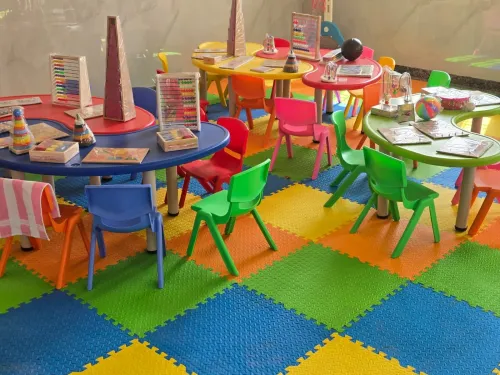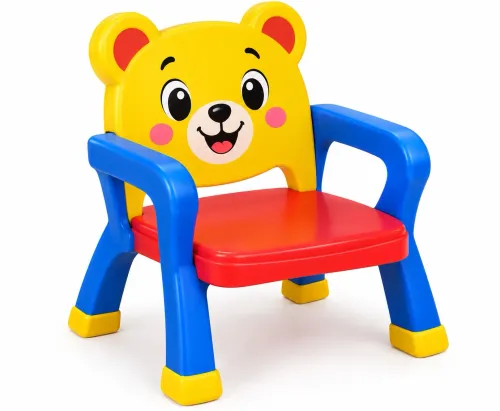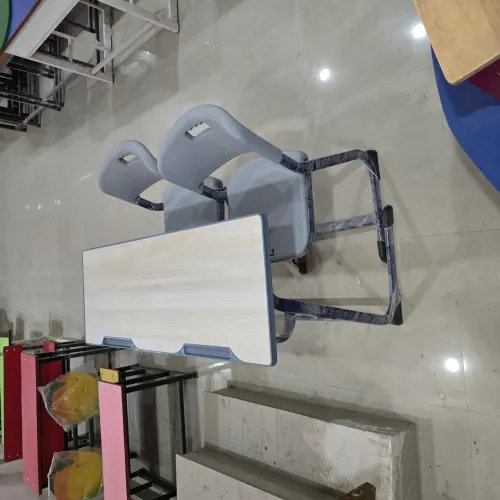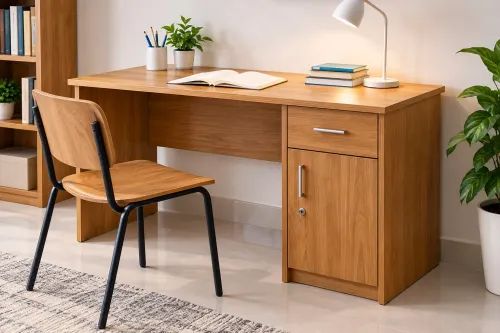
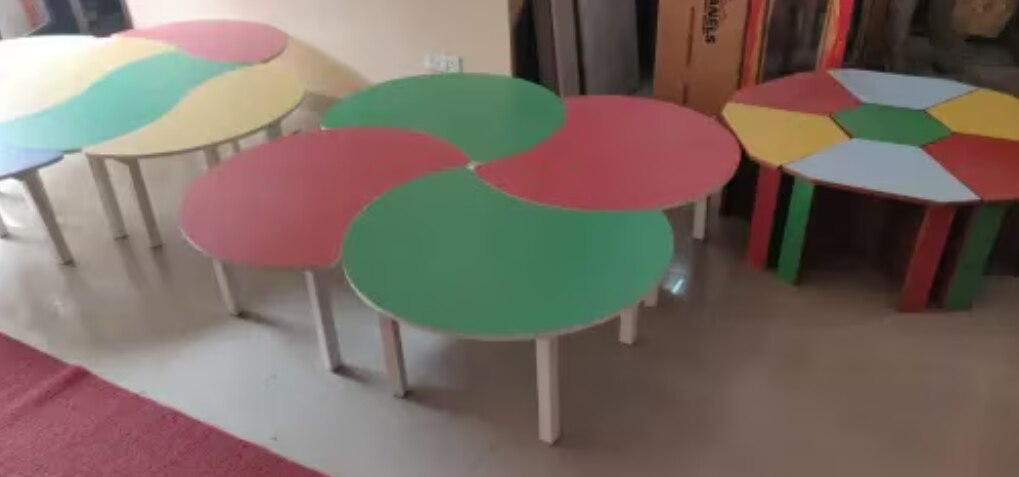
A flower-shaped table earns its space when four to six children need a shared activity surface and staff must supervise them from one position. You can make the decision by testing room clearance, usable seating, child-to-furniture fit, cleaning demands, layout flexibility and the complete delivered cost before placing an order.
Key takeaways
- Choose it when four to six children share activities regularly.
- Check chair fit, table stability, walking clearance and staff sightlines before ordering.
- Specify rounded edges, a cleanable surface and construction suited to messy activities.
- Compare delivery, installation, materials and warranty—not only the kids activity table price.
When a Flower Table Earns Its Place in a Delhi Daycare
A kids flower table in Delhi earns its fixed footprint when four to six children regularly do the same craft, puzzle, sensory activity or group task, and one staff member needs clear sightlines to every child. Its value is shared access and supervision, not a proven ergonomic advantage over rectangular or other table shapes.
Use this checklist before choosing one:
- Seat four to six children at the same activity often enough to justify a permanent central footprint.
- Confirm that staff can supervise every seat from one practical standing point.
- Test the actual materials: large drawing sheets, trays and sensory bins can turn six advertised seats into fewer usable workstations.
- Compare usable seats, cleaning time, staff visibility and layout flexibility rather than judging the shape alone.
Choose several small square tables, a rectangular table or individual desks when the room is narrow, layouts change frequently, furniture is stored against walls, or children need separate work surfaces. A rectangular table also uses wall-side space more efficiently, while modular squares are easier to group, separate, replace and move.
Flower petals leave curved gaps against walls, reducing circulation and storage access. Buy the flower shape only when shared activities and supervision outweigh that lost floor area; otherwise, its fixed footprint becomes an operating cost rather than a benefit.
How to Check the Table, Chairs and Walking Space Before Ordering
Start with the occupied footprint, not the tabletop: a 1,200 mm flower table can need roughly 2,000 mm or more across once chairs, pull-out space and movement are included.
1. Measure the room, doorway, lift, corridor turns and every point where the table must rotate. Mark the tabletop, chairs at their normal pull-out position and an unobstructed staff route with tape during operating hours. Watch whether children, bags or storage block the route.
2. Use 900–1,000 mm diameter as a starting point for four children and 1,200–1,500 mm for six. Then measure the actual chairs: six chairs that are each 350–400 mm wide do not automatically create six comfortable workstations around six petals.
3. Place the chairs against the taped outline and inspect every lobe. Check that each child gets usable tabletop width, clear knee and foot space, and no blocked legroom from the central base or neighbouring chair. Concave gaps can reduce seating against walls.
4. Test the real activity before ordering multiple units. Put out drawing sheets, trays, puzzles or sensory bins; a six-child flower table for daycare may become a four-child workstation when materials occupy the centre.
Sit in each position and confirm that the teacher can reach every child without crossing a chair or losing sight of another.
If the tape test narrows the walking route, blocks a doorway or leaves uneven seats, choose a smaller table, fewer chairs or a different configuration.
What to Specify for Child Fit, Stability and Messy Activities
Specify the intended child age or stature range before choosing table height. Each child should place both feet flat on the floor, clear the underside with their knees and keep forearms near tabletop height; a high table raises shoulders, while a low one encourages trunk flexion.
Use ISO 5970 as dimensional guidance, not as proof that one “preschool” height fits every child.
| Approach | Fit decision | Main risk |
|---|---|---|
| One fixed height | Suits a narrow, known stature range | Older or smaller children sit poorly |
| Two height bands | Matches two age or stature groups | Requires two chair sets |
| Adjustable table | Adapts as children grow | Costs more and needs secure adjustment |
Specify these construction details:
- Washable, low-absorption top with sealed edges; accept PVC edge-banding, compact laminate, sealed plywood or moulded plastic, not exposed MDF or particleboard.
- Radiused edges and fully rounded petal points.
- Recessed or covered fasteners, with no accessible shear or pinch points.
- Stable base that passes an off-centre load test, not just a straight-down weight test.
- Floor-protection glides that do not mark tiles and can be replaced.
Ask for written cleaning instructions covering paint, glue, clay, water and food. Confirm the finish tolerates repeated wiping and that spills cannot enter joints, edge cores or fastener holes; otherwise daily cleaning will turn small damage into swelling, staining and loose parts.
Which Table Shape and Configuration Fits Your Activities Best
A flower table is the better choice when four to six children regularly share one craft, puzzle, meal or sensory activity and staff need every child visible from one position. Its advantage is shared access and supervision, not a proven ergonomic benefit over other shapes.
| Format | Best fit | Main trade-off |
|---|---|---|
| Flower | Shared crafts, meals and sensory play around one centre | Fixed footprint; concave petals leave gaps against walls |
| Round | Equal access for group activities and easy supervision | Uses wall-side space less efficiently |
| Rectangular | Large drawing sheets, trays and wall-side placement | Children do not all face the same centre |
| Kidney | Face-to-face teaching and adult assistance | Less suitable for equal group access |
| Folding | Multipurpose rooms and frequent reconfiguration | Requires storage and repeated setup |
| Individual desks | Separation, independent work and flexible grouping | More furniture, movement and supervision points |
Do not count the catalogue seat number as the working capacity. Six chairs may become four usable stations when children need A3 sheets, trays, puzzles or sensory bins; place the actual chairs and materials on a sample table before ordering.
A flower table’s curved perimeter also wastes space when pushed against a wall, while rectangular tables can align with storage and leave straighter walking routes. Choose modular square tables instead when layouts change often or furniture must be stored daily.
For any shape, specify rounded edges, covered fasteners and no pinch points; a soft-looking flower outline does not prove safety.
How to Compare Delhi Quotes and Decide Whether the Price Is Worth It
The practical question is: is a kids flower table worth buying for daycares in delhi? Compare the delivered, usable setup—not the table-only number shown in a catalogue.
| Option | Indicative screening band | What to verify |
|---|---|---|
| Basic moulded-plastic or compact activity table | ₹4,000–₹8,000 | Whether chairs, GST and delivery are excluded |
| Laminated plywood or engineered-board table | ₹8,000–₹18,000 | Material thickness, sealed edges and assembly cost |
| Heavy commercial or custom unit | ₹15,000–₹30,000 or more | Load rating, unit weight and stair or lift charges |
These are budget bands, not quotations. Request separate prices for GST, freight, chairs, assembly, custom colours, stairs, lifts and replacement glides; a low kids activity table price in Delhi can become expensive after these additions.
Ask a children flower table supplier in Delhi for:
- Tabletop diameter and usable lobe width
- Table height and compatible chair seat height
- Material thickness and edge treatment
- Maximum load and unit weight
- Warranty exclusions and cleaning instructions
Indera Furnishers can be compared with other suppliers only after these specifications appear in writing.
Then score the table against four operating costs: usable seats, cleaning time, staff visibility and layout flexibility. Six advertised seats are poor value if only four children can work without blocked legroom, cleaning takes longer, staff lose sight of a child, or the fixed shape prevents reconfiguration.
A flower table earns its price when shared activities and one-point supervision consistently outweigh those space and maintenance costs.
Related product
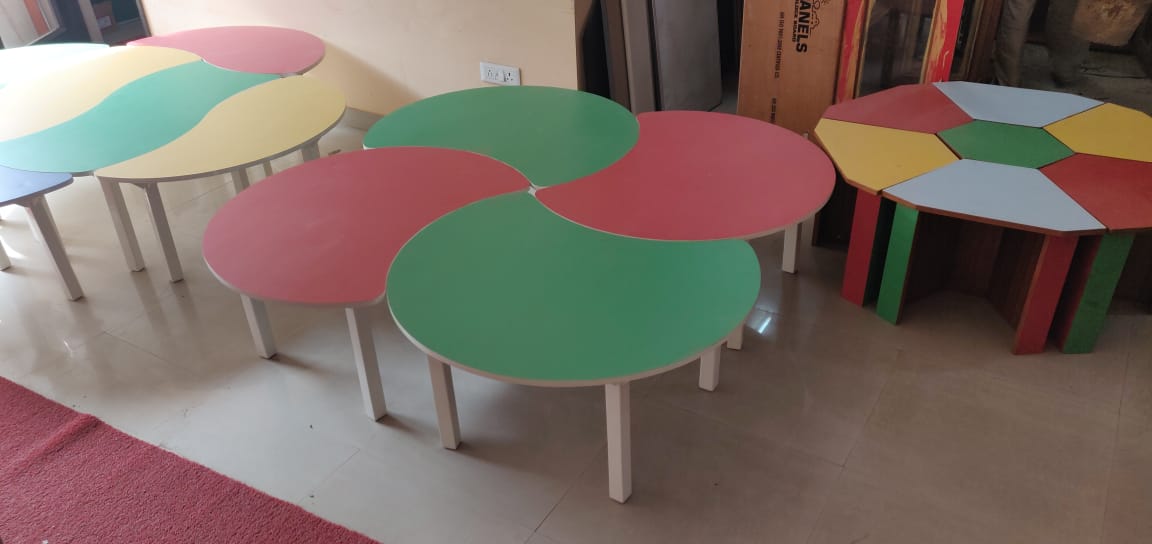 | Kids Flower Table ₹12000 The Kids Flower Table by Indera Furnishers is a vibrant and playful furniture piece designed for preschools, nurseries, and activity areas. View product → |
Frequently asked questions
When is a kids flower table worth buying for a Delhi daycare?
It earns its footprint when four to six children regularly share crafts, puzzles, sensory activities or group tasks and one staff member needs clear sightlines.
What should you check before ordering a flower table for daycare?
Check the table and chairs for child fit and stability, then measure walking space around the complete setup and confirm staff visibility.
What should you specify for child fit, stability and messy activities?
Specify suitable child-sized seating, stable construction, rounded edges and a surface that staff can clean after paints, glue, food or sensory materials.
How should you compare kids activity table prices in Delhi?
Compare the full quote, including materials, chairs, delivery, installation, warranty and cleaning requirements, rather than comparing table prices alone.
Keywords