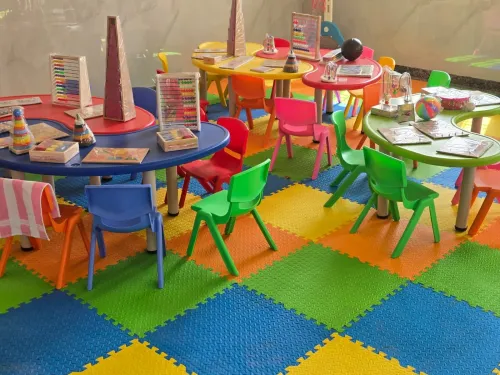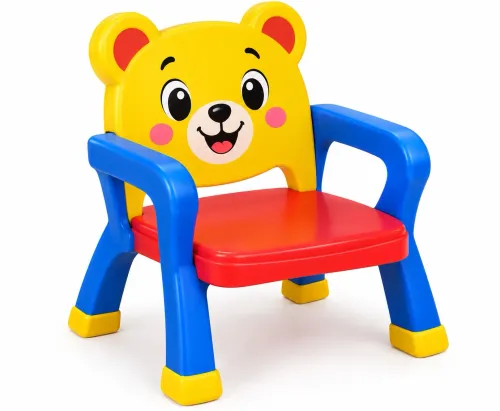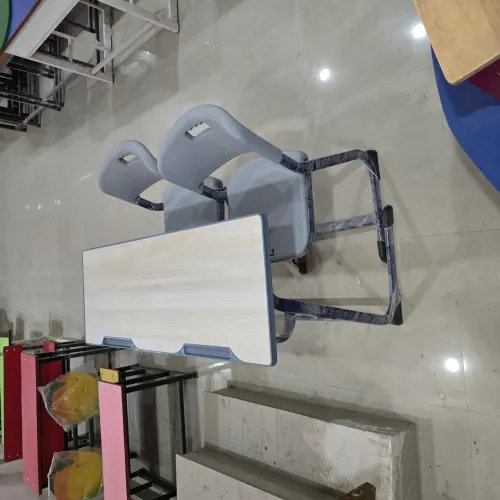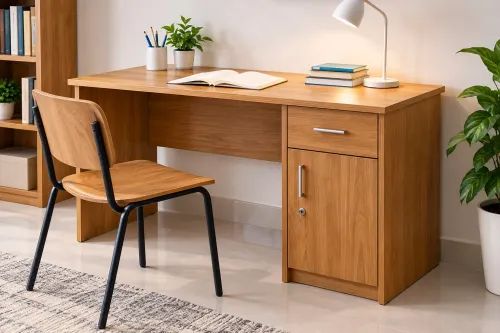
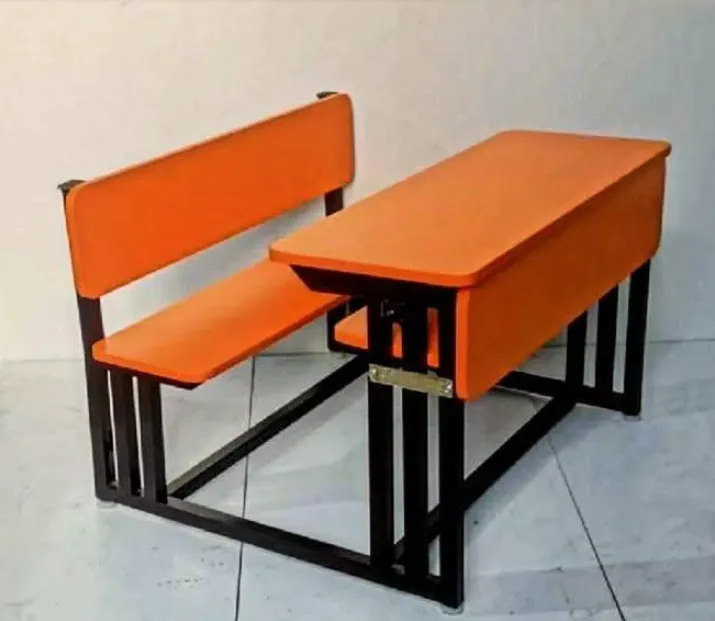
A play school classroom is very different from a classroom designed for teenagers. Young children interact with furniture constantly: they sit, stand, draw, play, move between activities, and explore their surroundings. Furniture selection therefore needs to prioritize child-friendly proportions, usability, stability, and easy classroom management.
When evaluating the Best Play School Furniture Manufacturer in Delhi, institutions should pay particular attention to how each product fits the age group and activity for which it is intended.
Child-Sized Furniture Matters
Furniture designed for adults or older students can make routine activities unnecessarily difficult for young children.
Tables and chairs should be appropriately proportioned so children can use them comfortably. Furniture that is excessively tall, deep, or bulky can also consume valuable activity space.
A useful play school layout typically combines seating with sufficient open space for movement and supervised activities.
Look Carefully at Edges and Finishing
Young children frequently come into close contact with tables, chairs, storage units, and activity furniture. Smooth surfaces and properly finished edges are therefore important purchasing considerations.
Schools can inspect samples for:
- Smooth corners and edges
- Stable legs and frames
- Securely fitted components
- Easy-to-clean surfaces
- Appropriate dimensions
- Practical weight and mobility
The furniture should feel suitable for everyday classroom activity rather than simply looking colourful.
Plan Different Activity Zones
Play school furniture does not need to follow a single uniform layout. Different areas can be created for reading, drawing, group activities, learning materials, and supervised play.
Low storage units can help organize frequently used items, while appropriately sized tables can support art and learning activities.
In Delhi, where some preschools operate within compact buildings, careful furniture planning can also help maintain clear movement areas.
Consider Cleaning and Maintenance
Early-learning environments require regular cleaning. Complex surfaces, difficult corners, and materials that are hard to maintain can increase daily housekeeping effort.
Schools should ask manufacturers about surface materials, cleaning suitability, component replacement, and general maintenance requirements before ordering.
Indera Furnishers serves the educational furniture segment in Delhi, where preschool furniture can be planned according to classroom dimensions, age groups, and institutional requirements.
A play school furniture purchase should ultimately be based on how children and teachers will use the room every day. Age-appropriate dimensions, stable construction, sensible layouts, manageable surfaces, and accessible storage can contribute to a classroom that works efficiently for both learning and supervised activity.
Keywords